The Fed Cuts Rates Again: Powell Balances Inflation Risks and Job Market Weakness
1. The Fed’s Key Decision
At tonight’s FOMC meeting:
The Federal Reserve cut interest rates by 0.25%, bringing the target range to 3.75%–4.00%.
It also announced a halt to balance sheet reduction starting December 1.
📊 This is the second consecutive rate cut since the easing cycle began in September — a clear signal that the Fed’s official tightening phase has ended, shifting into a neutral policy stance.
📉 2. The Rationale: Two Conflicting Risks
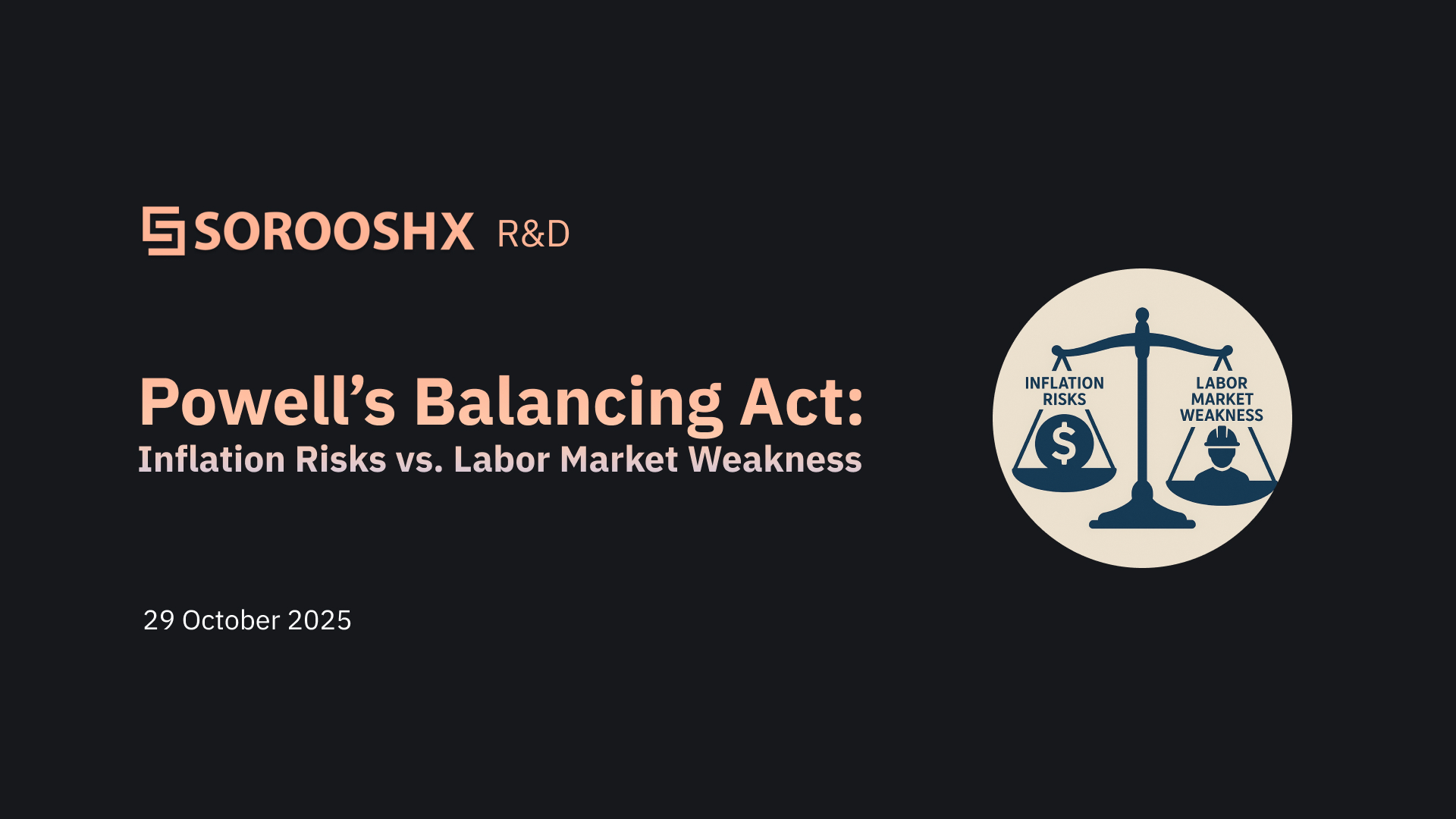
Powell emphasized that the economy is caught between two opposing risks:
Left Side Right Side
🔻 Slowing job growth 🔺 Inflation above the 2% target
Unemployment is rising gradually Tariffs and renewed commodity price increases have reignited inflation
The risk of a labor market downturn is rising The Fed fears inflation becoming entrenched above 2%
So, the Fed is trying to balance between these two threats:
A mild rate cut without sending a “mission accomplished” signal on inflation.
🧠 3. Powell’s Policy Message
Powell made several key points defining the Fed’s forward outlook:
A December rate cut isn’t guaranteed.
→ The Fed wants to keep its flexibility.
The balance sheet will remain steady for now.
→ This effectively halts quantitative tightening (QT) — a mildly dovish signal.
Labor market risks are rising.
→ This hints at a possible full shift to easing policy in 2026.
Powell implicitly said that the current cuts are “precautionary,” not the start of an aggressive easing cycle.
🧭 4. Analytical Summary
Tonight, Powell effectively flashed a yellow light — not a full green one for easing.
He’s caught between two concerns:
Cut too much → inflation could rebound.
Cut too late → the job market could contract sharply.
Likely Fed path ahead:
One more rate cut by end of 2025
Pause and assess the impact
Begin a true easing cycle in early 2026 if growth continues to weaken
🔍 Final Analytical Note:
Tonight, markets will react more to Powell’s tone than to the rate itself.
His tone was “cautiously dovish” — signaling that the Fed doesn’t want markets to think inflation is defeated, yet in practice it’s moving toward a softer stance.
🧾 Key Data:
Current rate: 4.00%–4.25%
Next meeting: December 10, 2025
Target Range (bps) Probability Market Interpretation
3.50–3.75% 68.5% Market expects another cut (total of 0.5% over two meetings).
3.75–4.00% 28.8% Market expects a milder 0.25% cut.
4.00–4.25% (unchanged) 2.6% Minimal probability of no change.
Rate hike 0% Fully priced out.
🔍 Market Interpretation:
Markets are almost certain (97.4%) that the Fed will cut again in December.
→ Fed Funds Futures traders expect another rate reduction.
68% of the market expects a larger 0.5% total cut,
which usually happens when growth and employment data show significant weakness.
Compared to Powell’s remarks (that the December move isn’t guaranteed),
this chart shows that markets don’t fully believe him — they’re pricing in stronger easing.
💡 Analytical Takeaway:
🔸 There’s a clear gap between Powell’s cautious tone and market expectations.
The Fed is moving carefully, but markets believe:
The path of rate cuts is taking shape — by the end of 2025, policy rates will likely sit around 3.5%–3.75%.
🔸 This implies:
Long-term bond yields (10Y) likely remain downward trending.
The U.S. dollar may experience mild weakening.
Risk assets (stocks and crypto) could see upside momentum into December.
🧭 In Short:
Markets are almost certain the Fed will cut again in December — even if Powell tries to sound cautious.
Expectations for monetary policy are now clearly in an “easing bias” phase.
Blog by "Mr.G"
Social trader & fundamental analyst